Robot Dogs for Security Patrol
How autonomous quadruped robots are becoming a standard part of modern security operations.
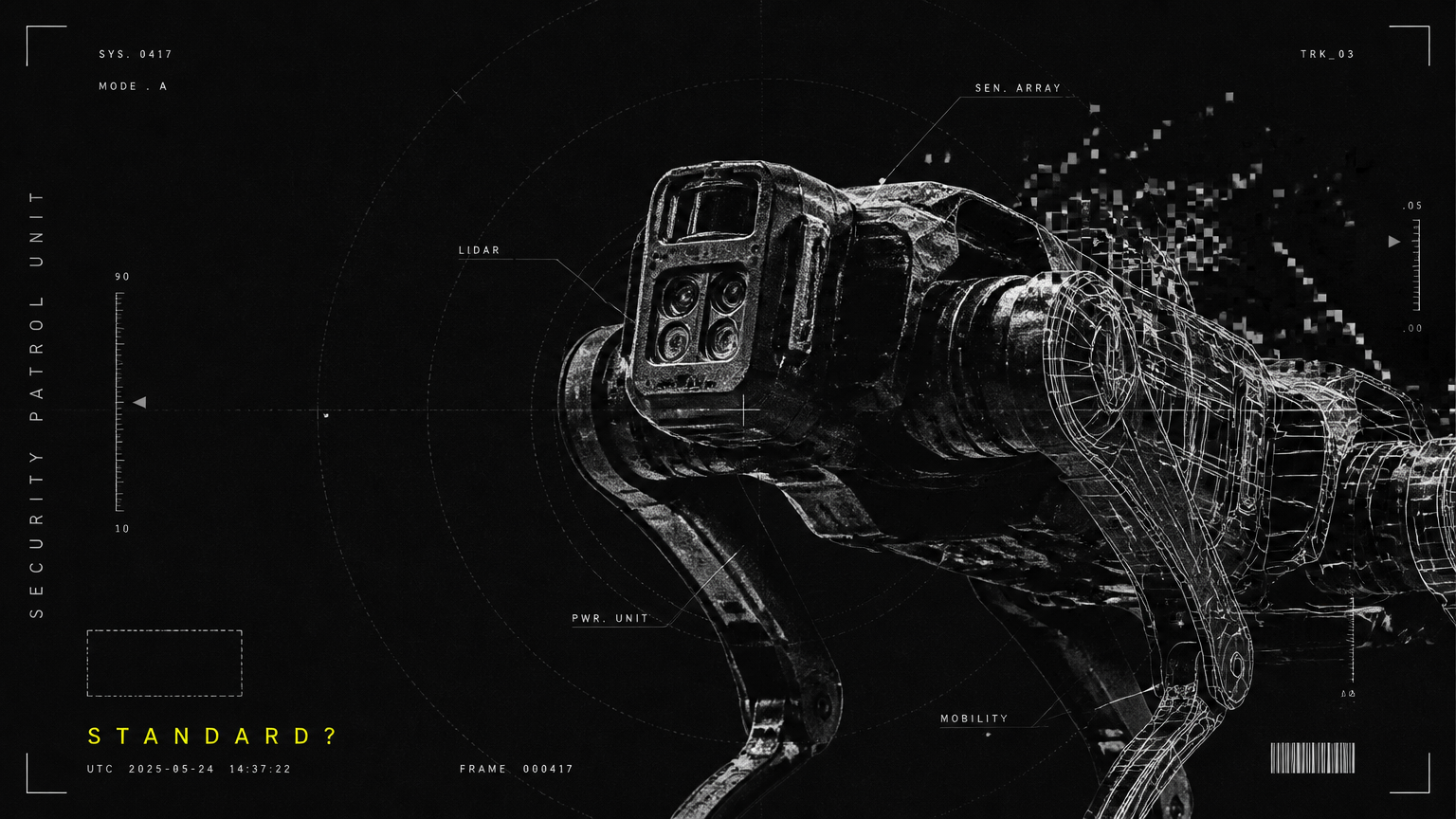
Robot dogs for security patrol are rapidly moving beyond hype, emerging as a viable and increasingly standard solution for enhancing surveillance, augmenting human security teams, and addressing critical operational challenges across various industries. Their agility, endurance, and advanced sensor capabilities offer significant advantages in areas with dense foot traffic, sprawling campuses, or 24/7 monitoring needs.
The concept of a robotic canine patrolling perimeters might once have seemed like science fiction, but today, these advanced machines are a tangible reality. As organizations grapple with labor shortages, escalating operational costs, and the demand for continuous, high-precision monitoring, the role of autonomous security robots, particularly robot dogs, is gaining significant traction. Allbotix, with its commitment to limitless innovation and precision engineering, is at the forefront of developing and deploying such sophisticated solutions, integrating them seamlessly into diverse operational environments.
The Current State of Robot Dogs in Security Patrol: Capabilities and Limitations
Modern robot dogs are far more than just mobile cameras. Equipped with an array of sensors, AI-powered analytics, and robust locomotion systems, they are transforming how security is managed.
Key Capabilities
- 24/7 Surveillance and Monitoring: Unlike human guards, robot dogs don't tire, ensuring continuous vigilance. They can patrol predefined routes, monitor specific zones, and provide real-time video feeds, thermal imaging, and even audio detection. This is particularly valuable for large campuses, industrial facilities, and government installations requiring constant oversight.
- Hazardous Environment Navigation: Their robust design allows them to access areas that might be dangerous or inaccessible for humans, such as construction sites, chemical plants, or areas with poor air quality. This capability extends to post-disaster assessments and hazardous material detection.
- Augmenting Human Security Teams: Robot dogs are not designed to replace human guards but to enhance their capabilities. They act as force multipliers, taking on routine, repetitive, or high-risk tasks, freeing up human personnel to focus on more complex decision-making, investigations, and direct interventions. This addresses the critical labor shortage problem faced by many industries.
- Advanced Sensor Integration: Beyond basic cameras, these robots can carry payloads like gas detectors, radiation sensors, LiDAR for 3D mapping, and even two-way communication systems, enabling remote interaction with individuals on patrol.
- Deterrence: The mere presence of a visible, patrolling robot dog can act as a significant deterrent to potential intruders or vandals, enhancing overall security posture.
Current Limitations
While impressive, robot dogs are not without their limitations:
- Complex Decision-Making: While AI is advancing rapidly, robot dogs still lack the nuanced judgment, empathy, and adaptability of human security personnel in complex, unpredictable social situations.
- Interaction and De-escalation: They cannot de-escalate a tense situation through verbal communication or physical intervention in the same way a trained human guard can.
- Environmental Challenges: Extreme weather conditions (heavy rain, snow, ice) or very rough, unpredictable terrain can still pose challenges to their mobility and sensor accuracy.
- Battery Life and Charging: While improving, battery life necessitates regular charging, which requires docking stations and careful route planning to ensure continuous operation.
- Cost of Initial Investment: The upfront cost of acquiring and deploying a fleet of robot dogs can be substantial, though this is often offset by long-term operational savings.
Robot Dogs vs. Human Guards: A Comparative Analysis
The question isn't whether robot dogs will replace human guards, but how they will integrate and optimize security operations.
| Criterion | Robot Dogs for Security Patrol | Human Guards |
|---|---|---|
| Availability | 24/7, no fatigue | Shift-limited, fatigue affects performance |
| Hazardous access | Can enter dangerous or restricted zones | Limited by safety regulations |
| Decision-making | Rule-based / AI-assisted, improving but limited | Nuanced judgment, adaptable to social context |
| De-escalation | Cannot de-escalate verbally or physically | Trained for direct intervention |
| Sensor payload | Thermal, LiDAR, gas, radiation, audio | Limited to human senses and handheld tools |
| Upfront cost | High initial investment | Lower upfront, higher recurring labor cost |
Ultimately, the most effective security postures combine both: robot dogs handle the repetitive, hazardous, and continuous monitoring workload, while human guards focus on judgment calls, interaction, and escalation — a partnership that plays to the strengths of each.